
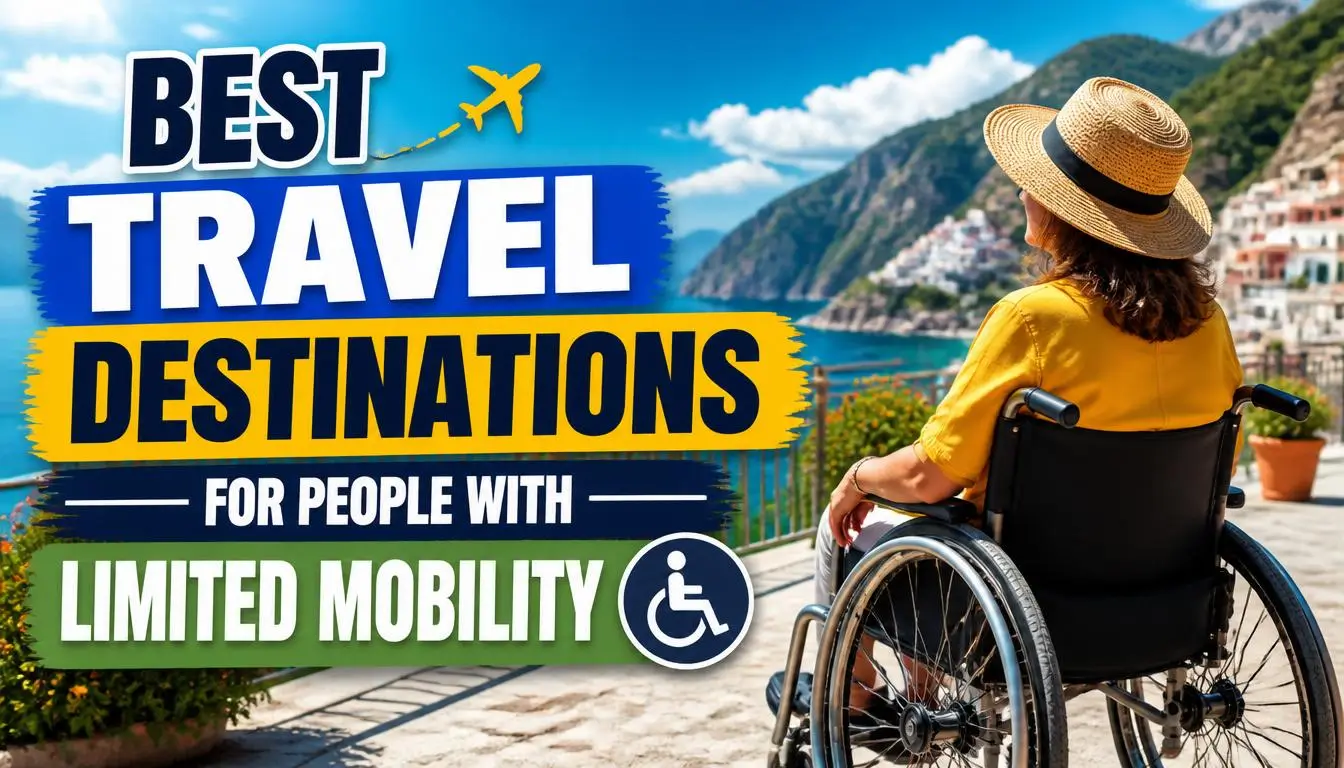
Finding great travel spots for people with limited mobility is entirely possible. The travel industry just does a bad job of talking about them. Discovering these places changed my entire approach to planning a vacation. My mother uses a wheelchair. For years we completely avoided flying overseas.
The logistics just felt way too hard to figure out. Then we finally booked a trip to Amsterdam. That changed everything. Forget about the cobblestones for a second. We found a city that actually designed its streets and buildings with accessibility in mind. She felt like a real tourist instead of a burden. Getting the destination right solves half your problems before you even pack a bag.
1. Amsterdam, Netherlands
The city spent the last twenty years fixing its infrastructure. Seeing those upgrades in a place built on centuries-old canal foundations is eye-opening. You can easily get inside places like the Rijksmuseum and the Van Gogh Museum. They have working elevators and ramps. The accessible restrooms are actually clean.
Having completely flat ground everywhere makes a massive difference. Hilly European capitals look great in pictures. They can turn into a nightmare if you rely on a mobility aid. Amsterdam works entirely in your favor here. Go online and download the Amsterdam Access guide before your trip. The local tourism board hands it out for free. It shows exactly which routes work best.
You get specific details on hotels and restaurants. Trams are your only real hurdle. A few older cars still have steep steps. The city clearly marks the newer low-floor versions that cover the main lines. You can even take a canal boat tour. Several companies offer roll-on boarding. Seeing the city from the water requires zero physical strain. Expect to spend around 100 to 150 dollars a night for a good hotel room.
2. Barcelona, Spain
People rarely expect Barcelona to handle mobility needs this well. Almost every metro station has a working elevator. That is incredibly rare for an old European city. You can roll right down Las Ramblas without an issue. The main streets in the Gothic Quarter are heavily paved. Down by the water the entire boardwalk is perfectly smooth.
Getting into the Sagrada Família is straightforward. They built accessible entrances and put elevators in specific towers. Up at Park Güell you can easily reach the main terrace. Just skip the steep hillside sections. Barceloneta beach rolls out long mats right down to the ocean. You can borrow a beach wheelchair for free. They built proper changing rooms big enough to actually move around in.
If you need a ride somewhere just call Taxi Amic. They run a whole fleet of adapted vans. Eating out is just as easy. Most dining rooms sit right on the ground floor. The waiters here just move a chair and make room without making a big production out of it.
3. Washington D.C., USA
This might be the easiest city to navigate in the entire country. The Americans with Disabilities Act forces public spaces to comply with strict rules. Washington takes those rules very seriously. You can get into every single government building and public monument.
The Smithsonian museums do not charge for entry. They are completely barrier-free. You will not find a better collection of accessible history anywhere on the planet. The National Mall stretches for two miles. The paved paths connect the Capitol straight down to the Lincoln Memorial. The Washington Metro installed elevators at every single stop. Just pull up their app to check for maintenance outages before you head underground. Visiting the Vietnam Veterans Memorial or the Martin Luther King Jr. Memorial is completely stress-free. The ground is flat and the paths are wide.
4. Singapore
Infrastructure here runs like a Swiss watch. That precision makes Singapore incredibly easy to manage in a wheelchair. The local MRT train system has step-free boarding at every single stop. City buses feature low floors. Sidewalks are wide and meticulously maintained. You will not find random potholes or broken concrete in the main tourist districts.
The entire city goes beyond basic legal requirements. Changi Airport consistently ranks as the best airport on earth. It is completely step-free. You can rent a scooter right at the terminal. Gardens by the Bay is a massive nature park. The paths wind through giant futuristic trees and climate-controlled domes.
Getting around inside is entirely effortless. Over on Sentosa Island you can visit the S.E.A. Aquarium or Universal Studios without fighting stairs. Heat is really your only enemy here. You want to plan your outdoor sightseeing for early morning. Stick to the air-conditioned walkways during the afternoon peak.
5. Orlando, Florida, USA
Everyone knows Orlando is the theme park capital of the world. What people miss is how those parks forced the city to upgrade its infrastructure. Places like Walt Disney World and Universal built some of the best accessibility systems anywhere. SeaWorld followed right along with massive upgrades of its own. They want your money. Making their parks easy to navigate is how they get it.
Walt Disney World offers a Disability Access Service. It lets you secure a return time for a ride instead of sitting in a massive physical line. You just look at the app to find companion restrooms or boarding assistance zones. Outside the parks the setup is just as good. Hotels up and down International Drive have wide hallways and pool lifts. Ground-floor rooms are incredibly easy to book. The local I-Ride Trolley accommodates wheelchairs for two bucks a trip. You do not even have to fly with your own heavy equipment. Local medical rental companies will drop a scooter right at your hotel check-in desk.
6. Vienna, Austria
Vienna mixes old-world history with heavy modern upgrades. You can visit the Belvedere Palace or the Vienna State Opera without hitting a single step. They installed dedicated entrances. Elevators are exactly where they should be. The staff actually knows how to help without hovering over you.
The public transit system deserves serious praise. Underground train stations have elevators and clear floor guides. A quick look at the city transit map shows exactly which routes work best. Vienna’s coffeehouse culture is perfect for travelers who prefer a slower pace. You can sit with a coffee and a slice of cake for hours. Most of these cafes have portable ramps ready to go. The tables are spaced far apart. Getting around the central Ringstrasse boulevard is a breeze. The sidewalks are wide and the pavement is perfectly flat.
7. Sydney, Australia
Australia passed strict disability laws years ago. Sydney proves what happens when a city actually enforces those rules. Getting around independently is entirely doable. Local businesses do not just treat accessibility like a massive inconvenience. They build proper ramps and maintain their elevators.
The Sydney Harbour foreshore features a flat paved circuit. You can roll past the Opera House and the Harbour Bridge right along the water. The local ferries have wide boarding planks. Taking a boat ride is a great way to see the skyline without burning energy on crowded sidewalks.
The local museums have excellent access points. The Opera House even runs specific tours designed for visitors who cannot do stairs. Out at Bondi Beach a paved path runs right along the cliffs. You get incredible ocean views without dragging wheels through deep sand. Booking an adapted taxi through a local phone app takes about two minutes.
8. Lisbon, Portugal
We need to be completely honest here. Lisbon is extremely hilly. Neighborhoods like Alfama have steep cobblestone alleys. Pushing a manual chair up those streets is incredibly hard. Ignoring that reality helps no one.
The good news is that the flat areas are well worth your time. Belém sits right on the river. It is completely level and packed with things to see. The Jerónimos Monastery and the local art museums are fully adapted for wheels. The Belém waterfront promenade runs for over a mile without a single bump.
Up in the Parque das Nações district things are even better. They built this whole area from scratch in the late nineties. The planners prioritized wide sidewalks and modern curb cuts. Moving between these flat zones is easy. Just order a wheelchair-accessible Uber. Avoid the steep hills entirely and focus on the waterfront.
9. Tokyo, Japan
The city spent billions upgrading its transit system before the 2020 Paralympic Games. Those improvements completely changed how visitors get around. The local subway system looks intimidating on a map. In reality almost every station has an elevator. The train workers will literally escort you to the platform if you ask for help.
The streets feature tactile paving everywhere. That exact same attention to detail applies to mobility access. Senso-ji Temple is a massive tourist draw in Asakusa. The main grounds are completely paved and simple to navigate. Down in the Odaiba district everything is brand new.
The indoor malls and digital art museums meet high modern building standards. Tokyo Disneyland rivals the American parks for ease of use. Eating out does require a little research. A lot of old noodle shops are tiny. Staff will go out of their way to find a solution. Check local accessibility websites to scope out dining spots before you show up.
10. Quebec City, Canada
The Lower Town section of Quebec City sits right on the river. The ground is flat and the old buildings are beautiful. The famous Upper Town sits on a massive cliff. A glass funicular connects the two zones. You just roll inside and skip the massive staircase entirely.
The Quartier Petit-Champlain is essentially one long historic shopping street. Some of the old stones are bumpy. The city did a lot of work recently to smooth out the main paths. Getting into the Château Frontenac or seeing the old fortification walls is completely straightforward. The signs point exactly to the flat routes. Avoid booking a trip here in the winter. The snow and ice make getting around incredibly difficult. May through October gives you clear sidewalks and perfect weather. You can book a high-end adapted room right in the old castle. Cheaper modern hotels sit just a few blocks away.
How to Research Accessibility Before You Book
Most people make one huge mistake when planning. They read standard hotel reviews written by young backpackers. A regular tourist has no idea if a grab bar is installed correctly. They do not measure bathroom doors. A five-star review means nothing if your chair cannot fit past the bed.
You need highly specific resources. Websites like Accessible Japan document exactly how wide train doors are. Booking platforms like Wheel the World send their own staff to measure hotel rooms. They never rely on a hotel manager just checking a box. Facebook groups dedicated to disabled travelers are pure gold. Thousands of members post photos of actual hotel bathrooms. You get honest details from people who actually understand the daily physical struggle.
Questions to Ask Your Hotel Before Booking
Never trust a little wheelchair icon on a booking website. Pick up the phone and call the front desk. Ask if the adapted room sits near the elevator. Find out if the bathroom door is 32 inches wide. Ask if the shower has a heavy lip on the floor. Ask if the swimming pool has a working mechanical lift. If the person on the phone hesitates or guesses you have your answer. Good hotels know these details instantly.
Frequently Asked Questions
What makes a destination truly accessible for people with limited mobility?
A ramp at the front door is just the bare minimum. A good city has step-free trains. The hotels install proper roll-in showers. The museums actually maintain their elevators. The local culture matters too. Waiters and shop owners should offer quick help without acting like you ruined their shift. Cities with strong local disability laws always perform the best.
Are cruises a good option for travelers with limited mobility?
Modern cruise ships handle mobility issues incredibly well. Big vessels run by Royal Caribbean or Celebrity have massive wide hallways. The adapted cabins feature huge bathrooms. The pool decks are completely flat. Getting off the ship is the only tricky part. Some small islands require you to take a tiny tender boat to the dock. Always check the port details before you hand over your credit card.
How do I find accessible accommodation that is genuinely accessible rather than just labeled that way?
Skip the big mainstream booking sites. Use platforms like Wheel the World. They physically inspect the rooms they sell. Read recent comments from actual wheelchair users. Call the property directly to verify door widths. Do not trust generic hotel certifications. Every country has different legal definitions for what counts as accessible.
What travel insurance considerations are important for travelers with limited mobility?
Find a policy that covers your specific pre-existing conditions. Make sure they include medical evacuation flights. A helicopter ride home can cost fifty thousand dollars if you get hurt in a remote area. Companies like World Nomads let you customize a plan. Just be completely honest on the intake forms. Read the tiny print at the bottom of the contract. Never assume a medical emergency is automatically covered.
Which airlines are best for travelers with limited mobility?
Singapore Airlines and Qantas usually rank at the very top. They train their flight attendants properly. The wide planes actually have bathrooms you can maneuver in. Delta gets decent reviews for domestic flights in America. Never rely on the little dropdown menu when buying a ticket online. Call the airline the next morning. Tell a human being exactly what kind of physical help you need at the gate.
Conclusion
Having a physical limitation does not mean you have to stay home. It just means you have to be smarter about where you go. These cities prove you can still have a massive adventure. You just need proper planning and honest information. Stop settling for trips that look good on paper but fail in reality. Pick a place that actually wants you there. Pack your bags and get going.